
2025 will likely be remembered as a hinge year — a period when politics, technology, climate, and culture shifted in ways that will define the next several decades. From renewed great‑power tensions and climate shocks to breakthroughs in AI, medicine, and quantum science, 2025 compressed years’ worth of change into twelve months.
This article examines the key events and trends of 2025 that genuinely changed the world — not just for headlines, but for their long‑term impact on how we live, work, and think.
Table of Contents
- Donald Trump’s Return and a New Era of Trade Conflict
- Wars, Ceasefires, and a Reshaped Security Order
- Climate Emergencies and the Reality of a Hotter Planet
- The Renewable Energy Takeoff
- The AI Acceleration: From ChatGPT‑5 to “Small Budget” Frontier Models
- Breakthroughs in Medicine and Global Health
- The Quantum Leap: 2025 as the Year of Quantum Science
- Space in 2025: From Private Rockets to Lunar Landers
- Cultural and Demographic Shifts That Redefined “Global”
- How 2025 Rewired Expectations for the Future
- FAQs
1. Donald Trump’s Return and a New Era of Trade Conflict
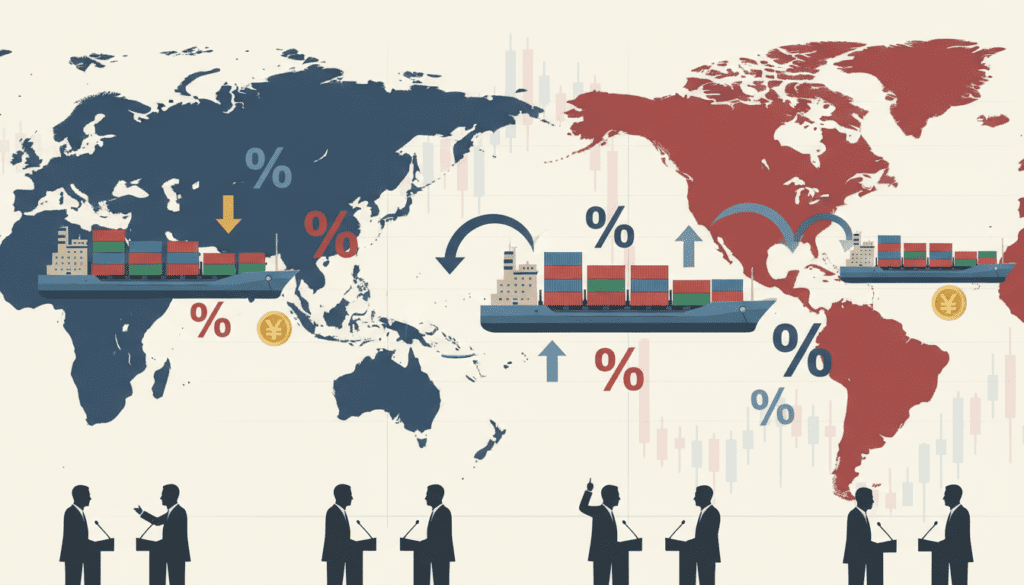
On January 20, 2025, Donald Trump returned to the White House, becoming one of the oldest presidents in U.S. history and only the second to serve non‑consecutive terms. His administration moved quickly to redraw the map of global trade.
Within months, the U.S. imposed sweeping tariffs on imports from China, Mexico, Canada, and other key partners — in some cases as high as 25% on selected goods, effectively reigniting and intensifying the U.S.–China trade war and straining North American supply chains as well Wikipedia – 2025.
This had three world‑changing consequences:
- Supply Chains Got More Political
- Companies that had spent years diversifying after the first wave of trade wars were pushed further to relocate production or “friend‑shore” into politically safer countries.
- Governments in Europe and Asia responded with their own incentives to attract factories, deepening industrial policy competition.
- Markets Lived in a State of Whiplash
- Tariffs and retaliatory measures created uncertainty in commodities, semiconductors, cars, and consumer electronics Wikipedia – 2025.
- A prolonged U.S. government shutdown — lasting over 40 days — added another layer of instability, delaying federal spending and regulatory decisions.
- Geopolitics Became an Economic Weapon
- Trade policy turned into a primary tool of geopolitical pressure, not just a background economic issue.
- For many countries in the Global South, this was a push to hedge more carefully between U.S., China, and regional blocs, rather than aligning firmly with one.
“2025 made it clear that globalisation didn’t end — it hardened. Trade became less about efficiency and more about control.”
— Hypothetical quote from a trade economist in a 2025 panel discussion
2. Wars, Ceasefires, and a Reshaped Security Order

Armed conflicts remained a grim feature of 2025. Yet some events signalled potential turning points.
Ukraine: Drones and Distributed Warfare
Ukraine continued to innovate on the battlefield, with operations such as “Operation Spiderweb,” a large‑scale drone campaign targeting Russian air bases deep behind the front lines Britannica – 2025 Year in Review.
This reinforced several long‑term trends:
- Cheap drones vs. expensive infrastructure: A few relatively inexpensive systems could threaten billions in aircraft, fuel depots, and logistics.
- Civil‑military tech crossover: Many of the technologies used were adapted from or closely linked to civilian drone and AI ecosystems.
The takeaway: Future warfare is likely to be more networked, more autonomous, and more accessible even to smaller states or non‑state actors.
Gaza: A Ceasefire and a Massive Prisoner Exchange
In 2025, a second Israel–Hamas ceasefire led to the release of remaining Israeli hostages in exchange for around 2,000 Palestinian prisoners Britannica – 2025 Year in Review.
While it did not resolve the core conflict, it:
- Reset the regional diplomatic landscape.
- Forced a re‑evaluation of mediation roles played by countries like Qatar and Egypt.
- Highlighted the humanitarian and political limits of prolonged high‑intensity conflict.
Other Flashpoints
- The U.S. escalated intervention in parts of Syria through operations like “Hawkeye Strike” Wikipedia – Portal: Current events.
- Coups and political crises in parts of Africa and protests in countries like Nepal showed how fragile many political systems remained under economic and climate pressures Britannica – 2025 Year in Review.
3. Climate Emergencies and the Reality of a Hotter Planet
2024 had already been confirmed as the hottest year on record, crossing key thresholds linked to 1.5°C of warming Wikipedia – 2025. In 2025, the consequences were no longer abstract climate charts — they were lived disasters.
Major events included:
- A magnitude 6.9 earthquake in the Philippines, killing dozens and displacing many more Wikipedia – 2025.
- An EF5 tornado in North Dakota, one of the most powerful classifications, razing communities and testing U.S. disaster preparedness.
- Major wildfires in California and around Los Angeles, in a now‑familiar pattern of scorching summers and smoky skies Livemint – 2025 global events.
- Cyclone Montha in India, causing tens of billions of rupees in damage and reminding South Asia of its vulnerability to warming oceans.
- A massive 8.8 earthquake in Russia’s Kamchatka region, triggering local tsunamis and international monitoring Wikipedia – 2025.
While some of these are tectonic rather than climate‑driven, the clustering of extreme events in a world already at record heat levels sharpened political and public urgency around adaptation:
- Cities accelerated investments in cooling infrastructure and resilient grids.
- Insurance markets came under intense strain, with some regions becoming effectively “uninsurable.”
- Discussions shifted from “if” climate impacts were real to “how fast” and “who pays.”
4. The Renewable Energy Takeoff
In a more hopeful development, 2025 was named the “Breakthrough of the Year” for the unstoppable rise of renewable energy by Science magazine Science – Breakthrough of the Year 2025.
Key drivers:
- China’s Global Green Exports
- China massively ramped up exports of solar panels, batteries, and grid components to the Global South.
- Many developing countries leapfrogged straight into renewables for new capacity, bypassing the coal‑heavy path taken by earlier industrialisers.
- Record Solar Adoption
- Solar installation rates broke new records, driven by lower costs and government incentives.
- In some regions, solar plus storage became cheaper than running existing fossil‑fuel power plants.
- Policy Momentum
- COP negotiations and national policies increasingly focused on implementation rather than mere pledges.
- Investment in transmission lines and flexible grids started to catch up with generation capacity.
“The energy transition stopped being a future plan in 2025. It became a present‑tense reality driven by economics, not just ethics.”
— Paraphrased from coverage in Science’s 2025 year‑end review
5. The AI Acceleration: From ChatGPT‑5 to “Small Budget” Frontier Models
Artificial intelligence continued its explosive trajectory in 2025.
ChatGPT‑5 and the Mainstreaming of Advanced AI
OpenAI released new iterations like ChatGPT‑5, significantly improving reasoning, multimodal understanding, and integration with tools, making AI feel less like a novelty and more like infrastructure Britannica – 2025 Year in Review.
For businesses and individuals, this meant:
- AI copilots became standard in productivity suites and coding environments.
- Knowledge work workflows were redesigned around AI draft‑and‑revise patterns.
- Education, design, and media saw a new wave of AI‑assisted content creation.
DeepSeek R1: Frontier AI on a Budget
A major psychological shift came from China’s DeepSeek R1, a powerful reasoning model reportedly trained for under $6 million — dramatically less than many assumed necessary for frontier‑level AI X – DeepSeek R1 discussion.
This changed the global conversation in two ways:
- Democratisation of Capability
- It suggested that advanced AI might be within reach of more countries and mid‑sized companies, not just U.S. tech giants.
- Regulatory and Safety Anxiety
- If powerful models can be trained cheaply, then governance, safety standards, and international coordination become even more urgent.
6. Breakthroughs in Medicine and Global Health
2025 was also remarkable for medical and public health advances, many of which will have multi‑decade ripple effects.
New Weapons Against Drug‑Resistant Infections
Researchers announced oral antibiotics effective against drug‑resistant gonorrhea, replacing painful injections and expanding access to treatment Science – Breakthrough 2025. In a world battling antimicrobial resistance, even a single new effective drug class can save millions of future infections from becoming untreatable.
Genetic and Cellular Therapies
Breakthroughs included:
- Gene therapies that slowed the progression of Huntington’s disease by up to 75% in early trials, giving families hope against a once inevitably devastating condition Science – Breakthrough 2025.
- Progress in treatments targeting Parkinson’s and related neurodegenerative conditions.
- A dramatic case where personalised base editing cured a baby with CPS1 deficiency, a lethal metabolic disorder, signaling how bespoke genomic medicine might work in practice Science – Breakthrough 2025.
Massive Wins in Prevention: HPV Vaccination
The vaccine alliance Gavi reached its HPV vaccination targets ahead of schedule, protecting around 86 million girls against high‑risk HPV strains linked to cervical cancer Science – Breakthrough 2025.
This is the kind of quiet, background change that truly alters the future: decades from now, millions of women will not develop cervical cancer because of shots given in the mid‑2020s.
7. The Quantum Leap: 2025 as the International Year of Quantum Science
The UN declared 2025 the International Year of Quantum Science, and the field delivered on the hype Wikipedia – 2025 in science.
Key milestones:
- Microsoft’s “Majorana 1” topological qubit chip: A step towards more stable qubits that are less prone to decoherence, addressing one of the biggest bottlenecks in building practical quantum computers.
- Quantum signals sent to satellites, demonstrating more robust quantum communication over long distances ScienceDaily – quantum science 2025.
Why this matters:
- Quantum computing could eventually transform fields from cryptography and materials science to drug discovery.
- Quantum communication promises ultra‑secure channels resistant to conventional hacking.
2025 did not deliver a general‑purpose quantum computer — but it did solidify quantum tech as a serious, near‑term industry rather than a speculative research topic.
8. Space in 2025: From Private Rockets to Lunar Landers
Spaceflight in 2025 was driven as much by private companies as by national agencies.
Notable events:
- Axiom Mission 4 to the International Space Station included astronauts from Poland and India, reinforcing the trend of commercial missions opening access to more nations Wikipedia – 2025.
- Firefly Aerospace’s Blue Ghost lander reached the Moon, pushing forward commercial lunar logistics.
- Blue Origin’s New Glenn heavy‑lift rocket finally launched, adding serious competition in the big‑rocket market AOL – 2025 headlines.
- The Great Comet of 2025 (C/2024 G3 ATLAS) lit up the skies, becoming a global shared spectacle Wikipedia – 2025.
Meanwhile, Expo 2025 in Osaka focused heavily on smart cities, sustainability, and innovation, blending Earthly concerns with futuristic visions International events 2025 overview.
9. Cultural and Demographic Shifts That Redefined “Global”
The Passing of Pope Francis and Election of Leo XIV
In April 2025, Pope Francis died, ending a papacy marked by a focus on mercy, social justice, and climate responsibility Channels TV – Ten global events of 2025.
His successor, Pope Leo XIV, an American‑born former missionary in Peru, brought a new geographic and cultural dimension to Church leadership. Given Catholicism’s global footprint, this leadership change has implications for social debates, humanitarian agendas, and interfaith dialogue.
Mega‑Cities and Changing Urban Gravity
In demographic news, Jakarta overtook Tokyo as the world’s largest city, with around 42 million people in its greater metropolitan area Wikipedia – 2025.
This underscored several trends:
- The economic and cultural gravity of the world is steadily tilting toward South and Southeast Asia.
- Infrastructure, climate resilience, and urban governance in mega‑cities are becoming critical global issues.
Massive Religious Gatherings and Shared Rituals
Events like the Mahakumbh Mela in India, drawing hundreds of millions of pilgrims, showed how traditional religious and cultural gatherings remain powerful in an increasingly digital age Wikipedia – 2025.
Such events pose both logistical challenges (health, transport, security) and opportunities for demonstrating large‑scale coordination and social solidarity.
10. How 2025 Rewired Expectations for the Future
If we step back and connect the dots, what truly changed in 2025?
1. The End of “Business as Usual” Globalisation
Trade wars, tariffs, and strategic supply chains made it clear: economic links are now filtered through geopolitical risk. Countries and companies alike are designing for redundancy and resilience rather than just cost minimisation.
2. Technology as a Force Multiplier — for Good and Risk
From AI and quantum computing to gene editing, 2025 deepened a pattern:
- New tools can radically improve health, energy access, and productivity.
- The same tools, deployed recklessly or unequally, can widen gaps and create new vulnerabilities.
3. Climate as a Present, Not Future, Constraint
Extreme events and record temperatures in 2025 reinforced that the climate crisis is no longer a future scenario. It is the fixed background condition against which all other politics and economics play out.
4. A Multipolar, Multi‑Narrative World
With rising powers, varied political systems, and shifting demographic centers, 2025 showed a world that is:
- Less centered on any single superpower.
- More fragmented in narrative — different regions telling different stories about what “progress” means.
Quick Summary Table: Key World‑Changing Themes of 2025
| Theme | What Happened in 2025 | Why It Matters Long‑Term |
|---|---|---|
| Trade & Geopolitics | Trump’s return; high tariffs; long U.S. shutdown | Hardens globalisation; pushes reshoring and friend‑shoring |
| Wars & Security | Drone warfare evolution; Gaza ceasefire and prisoner exchange | Shows future of conflict and fragile but vital diplomacy |
| Climate & Disasters | Hottest years confirmed; quakes, cyclones, fires, mega‑tornado | Accelerates adaptation, insurance crises, and climate justice debates |
| Renewable Energy | “Breakthrough of the Year”; record solar; China’s green exports | Locks in the economic logic of decarbonisation |
| Artificial Intelligence | ChatGPT‑5; DeepSeek R1 and other advanced models | Makes frontier AI more accessible; intensifies safety and governance debates |
| Medicine & Global Health | New antibiotics; gene therapies; CPS1 cure; Gavi hits HPV target | Transforms chronic and inherited disease; prevents future cancer waves |
| Quantum Technology | Majorana 1 chip; satellite quantum links; UN Year of Quantum Science | Lays foundation for future computing and secure communication |
| Space & Exploration | New Glenn launch; lunar landers; Axiom 4; Great Comet visibility | Normalises commercial space; expands scientific and economic horizons |
| Culture & Demography | Death of Pope Francis; Pope Leo XIV elected; Jakarta becomes largest city; Mahakumbh Mela’s scale | Shifts religious, cultural, and urban centers of gravity |
11. FAQs
Q1: Was 2025 “worse” or “better” than previous years?
It was both. Conflicts, disasters, and political turmoil made 2025 feel harsh and unstable. At the same time, gains in renewable energy, medicine, and AI/quantum tech laid foundations that could dramatically improve life expectancy, health, and sustainability. It’s more accurate to say 2025 was intense and consequential rather than simply good or bad.
Q2: Which single development from 2025 will matter most in 20–30 years?
Arguably, the acceleration of renewable energy adoption and global HPV vaccination will be among the most impactful. They will quietly shape health and climate trajectories for billions of people, even if they don’t generate dramatic daily headlines Science – Breakthrough 2025.
Q3: How did AI in 2025 change everyday life, not just tech news?
For many workers, 2025 was the year AI became embedded in routine tasks: drafting emails, summarising documents, helping code, translating languages, and even brainstorming ideas. It didn’t replace everyone — but it began to reshape what “normal productivity” looks like.
Q4: Did international cooperation improve or break down in 2025?
Both trends appeared side by side. Trade tensions and regional conflicts showed fragmentation and distrust. Yet global efforts in vaccines, climate, and scientific collaboration — for example, around quantum science and health breakthroughs — demonstrated that large‑scale cooperation is still possible and powerful.
Conclusion: A Legacy of Resilience and Transformation
As we look back on the whirlwind that was 2025, it is clear the year served as a definitive bridge between the old world and a new, more complex reality. While headlines were often dominated by the friction of trade wars, the tragedy of natural disasters, and the uncertainty of political shifts, the underlying story of 2025 was one of remarkable human ingenuity and systemic adaptation.
We witnessed renewable energy move from a “green alternative” to an economic powerhouse and medical science turn the tide on once-untreatable diseases. 2025 did not just bring change; it accelerated the future, forcing us to rewire our global systems for a more digital, decentralized, and environmentally conscious world. Ultimately, the legacy of 2025 lies in its reminder that even in an era of profound disruption, the capacity for breakthrough and progress remains our most powerful global currency.