
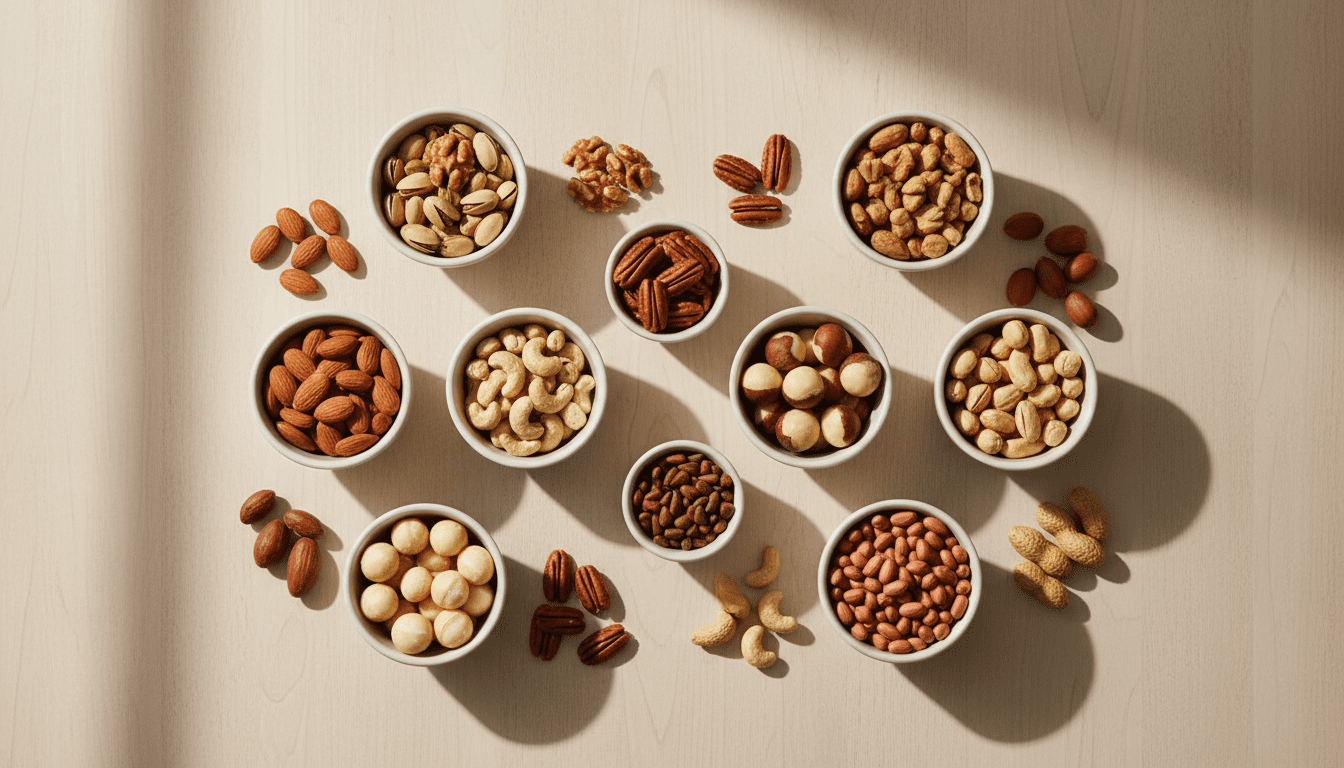
Nuts are one of those rare foods that check almost every “healthy eating” box: they’re satisfying, convenient, shelf-stable, and genuinely nutrient-dense. Eat a small handful and you typically get a powerful combo of healthy fats, plant protein, fiber, vitamins, minerals, and protective plant compounds—the kind of mix that helps you stay full and makes “snacking” work with your goals instead of against them.
But here’s the nuance: there isn’t one single “healthiest nut.” Different nuts shine for different reasons—omega-3s, vitamin E, magnesium, antioxidants, or even just a better calorie-to-satiety ratio. As MD Anderson puts it, “Different nuts contain different amounts of various nutrients, so no one nut is healthier than another”. The practical takeaway? Rotate your nuts instead of eating only one kind forever.
Below are 10 of the best options (including one “honorary nut” that isn’t botanically a nut—but belongs in your pantry anyway).
Why nuts are considered “healthy” in the first place
According to Mayo Clinic, nuts support heart health in several ways—largely because they provide unsaturated fats, fiber, plant sterols, omega-3 fatty acids (in some nuts), and L-arginine. Research links frequent nut intake to improvements in markers such as LDL (“bad”) cholesterol, triglycerides, inflammation, and blood pressure in some contexts.
One key point: nuts are calorie-dense, so the health magic is most consistent when they replace less nutritious snacks—not when they’re added mindlessly on top of everything.
A simple snack rule that works: “Unsalted, uncoated, and portioned.”
Translation: choose nuts without added salt/sugar, avoid candy coatings, and pre-portion a serving.
The Top 10 Healthy Nuts (and what each is best for)
1) Almonds — the “everyday” nutrient powerhouse
Why they’re great: Almonds are often the go-to “healthy nut” for good reason: they’re rich in vitamin E, contain fiber, and are associated with heart-health benefits in many diet patterns.
Best for:
- A balanced snack that supports fullness
- People trying to increase vitamin E intake
- Adding crunch without needing much
How to eat them:
- With fruit (apple/pear/orange)
- Chopped on oatmeal or yogurt
- As unsweetened almond butter (watch portions)
Watch-outs: Flavored almonds can be surprisingly high in sodium/sugar.
2) Walnuts — best “brain-and-heart” profile (omega-3 ALA)
Why they’re great: Walnuts stand out for their alpha-linolenic acid (ALA), a plant omega-3. BBC Good Food notes walnuts have the highest content of ALA among nuts discussed. Mayo Clinic also highlights omega-3s as one reason some nuts support heart health.
Best for:
- People who don’t eat much fish and want more omega-3 fats (plant form)
- Adding richness to salads and grains
How to eat them:
- Toss into lentil salad
- Blend into pesto-style sauces (with basil, garlic, olive oil)
- Stir into oatmeal with cinnamon
Watch-outs: Walnuts go rancid faster than some nuts—store in the fridge/freezer for freshness.
3) Pistachios — protein + fiber + “snack pacing”
Why they’re great: Pistachios provide protein and fiber, and they’re often eaten in-shell, which naturally slows you down (a sneaky help for portion control). They’re frequently mentioned among top healthy nuts in evidence-based nutrition summaries.
Best for:
- A satisfying, higher-protein snack feel
- Anyone who likes a “small-bites” snack
How to eat them:
- Keep a bowl of in-shell pistachios (and stop when you’ve had a small handful)
- Add to chopped salad for crunch
Watch-outs: Salted pistachios can push sodium up fast—choose unsalted if you’re watching blood pressure (MD Anderson encourages raw/unsalted as a starting point for many people).
4) Cashews — creamy texture + useful minerals
Why they’re great: Cashews are a solid source of minerals such as magnesium, and BBC Good Food notes they may support heart health markers like blood lipids and blood pressure in some studies.
Best for:
- Making meals feel richer without dairy
- Blending into sauces (creamy without cream)
How to eat them:
- Blend soaked cashews into a creamy pasta sauce
- Add to stir-fries at the end for crunch
Watch-outs: Cashews are easy to overeat because they’re so creamy—portion them.
5) Hazelnuts — vitamin E + rich flavor
Why they’re great: Hazelnuts contribute vitamin E and mostly unsaturated fats; BBC Good Food highlights their nutrient richness and potential benefit for blood lipids.
Best for:
- A dessert-like flavor without dessert ingredients
- Pairing with fruit (especially apples and pears)
How to eat them:
- Toast lightly and sprinkle over oatmeal
- Add to homemade granola (go easy on sweeteners)
Watch-outs: Many hazelnut products come sugar-heavy—choose plain hazelnuts rather than sweet spreads.
6) Pecans — rich taste + plant sterols
Why they’re great: Pecans contain heart-friendly fats, and BBC Good Food notes they include plant sterols, which can support cholesterol management in diet patterns.
Best for:
- Adding satisfying “buttery” crunch to salads
- A more indulgent taste in small amounts
How to eat them:
- Sprinkle over roasted vegetables
- Add to a spinach salad with strawberries
Watch-outs: Easy to over-portion (they’re delicious and energy-dense).
7) Macadamias — mostly monounsaturated fats
Why they’re great: Macadamias are famous for being higher in fat, but much of it is monounsaturated; BBC Good Food frames them as a source of heart-friendly fats. Mayo Clinic also emphasizes that unsaturated fats are a key mechanism of heart health in nuts.
Best for:
- Low-carb style eating patterns (they’re lower in carbs than many nuts)
- Tiny portions that feel luxurious
How to eat them:
- Use chopped macadamias as a finishing garnish on fish or salads
Watch-outs: Calorie-dense—this is a “small portion, big satisfaction” nut.
8) Brazil nuts — selenium superstar (but portion matters)
Why they’re great: Brazil nuts are extremely high in selenium, a mineral important for thyroid function and antioxidant roles. But because they’re so high, Healthline explicitly advises keeping intake to just a few per day to avoid exceeding the upper limit.
Best for:
- People who want a simple selenium boost (food-first)
How to eat them:
- 1–2 nuts as part of a mixed nut rotation
Watch-outs: Don’t treat Brazil nuts like “free snacking.” They’re more like a supplement-food.
9) Pine nuts — small but nutrient-dense (and pesto’s best friend)
Why they’re great: Pine nuts are technically seeds, but nutritionally they behave like nuts and are rich in beneficial fats. BBC Good Food highlights the vitamin E content and culinary uses.
Best for:
- Adding a “restaurant finish” to simple meals
- Pesto and Mediterranean-style dishes
How to eat them:
- Toast briefly (they burn fast)
- Sprinkle on soups, salads, or pasta
Watch-outs: Pricey; buy small amounts and store cold to prevent rancidity.
10) Peanuts — not a nut, but absolutely a healthy staple
Why they’re great: Peanuts are technically legumes, but both Healthline and MD Anderson include them in practical “nut” discussions because they’re used similarly and have a comparable nutrient profile in daily life (Healthline; MD Anderson).
Best for:
- Budget-friendly protein + healthy fats
- Quick snacks and sauces
How to eat them:
- Dry-roasted, unsalted peanuts
- Natural peanut butter (check labels for added sugar/oils)
Watch-outs: Peanut butter portions add up fast; measure 2 tablespoons if you’re tracking intake (MD Anderson notes nut butter serving sizes matter) (MD Anderson).
Quick comparison table: which nut should you pick?
| Nut | What it’s known for | Best for | Simple serving idea | Key caution |
|---|---|---|---|---|
| Almonds | Vitamin E, fiber | Everyday snacking | 1 small handful + fruit | Flavored/salted versions |
| Walnuts | ALA omega-3 | Heart/brain-focused rotation | Salad topper | Rancidity (store cold) |
| Pistachios | Protein + fiber | Portion control (in-shell) | In-shell snack bowl | Salted versions |
| Cashews | Creamy texture, minerals | Dairy-free creamy sauces | Blend into sauce | Easy to overeat |
| Hazelnuts | Vitamin E, rich flavor | Sweet-ish cravings | Toast + oatmeal | Sugary products |
| Pecans | Plant sterols, flavor | Salads/veg crunch | Spinach salad topper | Portion creep |
| Macadamias | Monounsaturated fats | Small “luxury” portions | Chopped garnish | Very calorie-dense |
| Brazil nuts | Selenium | Micro-nutrient boost | 1–2 nuts/day | Too much selenium |
| Pine nuts | Vitamin E, culinary use | Pesto + finishing | Toast + sprinkle | Burns/rancidity |
| Peanuts | Affordable protein | Budget nutrition | Dry-roasted snack | Peanut butter portions |
How much should you eat? (the serving-size reality)
A common “serving” is about 1 ounce (a small handful). Mayo Clinic notes nuts are high in calories and recommends moderation; it also states adults can aim for about 4 to 6 servings of unsalted nuts per week as part of a healthy diet (Mayo Clinic).
MD Anderson gives a helpful visual guide showing how different nuts translate into a serving—for example, 1–2 Brazil nuts can be a serving, while pistachios might be dozens depending on size (MD Anderson). That’s why eyeballing portions is tricky: a “handful” of Brazil nuts is not the same as a handful of pistachios.
A practical portion strategy
- Buy mixed nuts and pre-portion into small containers.
- Or use the “one palm, once” rule: one small handful per day, not “refills.”
How to choose the healthiest nuts at the store
MD Anderson generally encourages starting with raw and unsalted options, especially for people watching blood pressure or sodium (MD Anderson). Mayo Clinic also suggests raw or dry-roasted rather than oil-roasted, and avoiding added sugar/salt that can cancel out benefits (Mayo Clinic).
Best “default” picks
- Raw or dry-roasted
- Unsalted
- No sugar coatings
- No chocolate/candy shells (treat, not daily fuel)
Real-life ways to eat more nuts (without “accidentally overeating”)
- Breakfast: oats + chopped walnuts/almonds
- Lunch: salad + pistachios/pecans
- Dinner: cashews in stir-fry, pine nuts on pasta/veg
- Snack: a pre-portioned mixed nut pack
- Dessert swap: toasted hazelnuts over fruit and yogurt
If you tend to snack when stressed or distracted, pick in-shell pistachios or pre-portioned servings to slow the pace.
FAQ: Top questions about healthy nuts
1) Are roasted nuts less healthy than raw?
Not automatically. The bigger issue is how they’re roasted. Mayo Clinic suggests choosing raw or dry-roasted over oil-roasted for a heart-health approach (Mayo Clinic).
2) Are salted nuts bad for you?
Salted nuts aren’t “bad,” but sodium can add up—especially if you’re managing blood pressure. MD Anderson notes they often recommend starting with raw and unsalted for many patients (MD Anderson).
3) How many Brazil nuts can I eat per day?
Healthline advises keeping Brazil nut intake to a few per day to avoid too much selenium (Healthline). For most people, 1–2 is a sensible daily “cap” when you’re eating them regularly.
4) Are nut butters as healthy as whole nuts?
They can be, but labels matter. MD Anderson warns many nut butters contain added sugar, and a serving is only about 2 tablespoons (MD Anderson).
5) If I’m allergic to nuts, what’s a good alternative?
MD Anderson suggests seeds (chia, flax, hemp, pumpkin, sunflower, etc.) as practical alternatives for many people (MD Anderson).
Conclusion: the “best” nuts are the ones you’ll eat consistently (in the right form)
If you want one simple strategy: choose mostly unsalted, minimally processed nuts, rotate varieties, and stick to a small handful serving. Almonds and pistachios make easy daily snacks, walnuts bring omega-3 ALA, Brazil nuts can cover selenium in tiny amounts, and peanuts offer budget-friendly nutrition that’s hard to beat.
Most importantly, nuts work best when they replace ultra-processed snacks—not when they become an unlimited “health food free-for-all.”