Lacoste is more than a little green crocodile stitched on a polo shirt. It’s a story of defiance, elegance, and quiet rebellion that began on a scorching tennis court almost a century ago—and evolved into one of the world’s most recognizable lifestyle brands.
In this article, we’ll walk through Lacoste’s journey in a storytelling tone: how it started with a bold French tennis champion, how a nickname became a logo, how a simple polo changed fashion forever, and what Lacoste looks like today in a world of streetwear, collaborations, and global culture.
A Young Tennis Rebel in White
Picture Paris in the 1920s. The world is roaring back to life after the First World War. Jazz spills from smoky bars, cars are still a novelty, and on the clay and grass courts of Europe, a young Frenchman named René Lacoste is rewriting the rules of tennis.
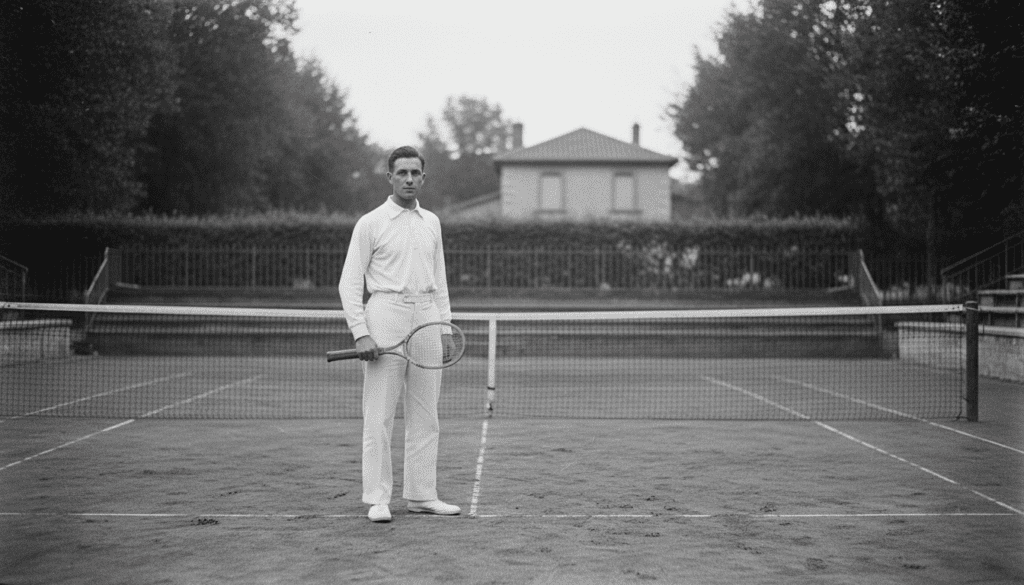
Back then, tennis players wore long-sleeved shirts, trousers, and even ties. It was less “sport” and more “gentleman’s ritual.” But René Lacoste wasn’t interested in rituals. He was obsessed with performance.
He studied his opponents like a scientist:
- How they moved
- Where they faltered
- How the ball behaved under pressure
He was calm, methodical, and relentless. It wasn’t long before spectators and journalists noticed he wasn’t just playing tennis—he was dissecting it.
One American journalist gave him a nickname that would change fashion history forever.
The Birth of “The Crocodile”
During a Davis Cup trip to the United States, the French team captain promised René a crocodile-skin suitcase if he won an important match. He didn’t win that day, but a journalist had already turned the story into legend.
The headline called him “The Crocodile.”
Why a crocodile?
- Because he was tenacious.
- Because he hung on to every point.
- Because once he locked in, he didn’t let go.
René Lacoste embraced the nickname. Instead of brushing it off, he made it part of his identity. Soon, a friend—French designer Robert George—sketched a small crocodile.
René had that crocodile embroidered on his blazer.
This was a quiet revolution. At a time when logos weren’t worn proudly on the outside, René stepped onto the court with an animal stitched over his heart. Spectators noticed. Photographers captured it. A brand story had begun—before there was even a brand.
“In sport, as in life, style is a way of being.” – Attributed to René Lacoste
The Invention of the Polo: When Comfort Met Elegance
Tennis in the 1920s was elegant but impractical. Starched shirts, long sleeves, and stiff collars weren’t designed for sweat, speed, or the modern game.
René Lacoste decided to change that.
He created a shirt that was:
- Short-sleeved, for freedom of movement
- Made from breathable cotton piqué, for comfort
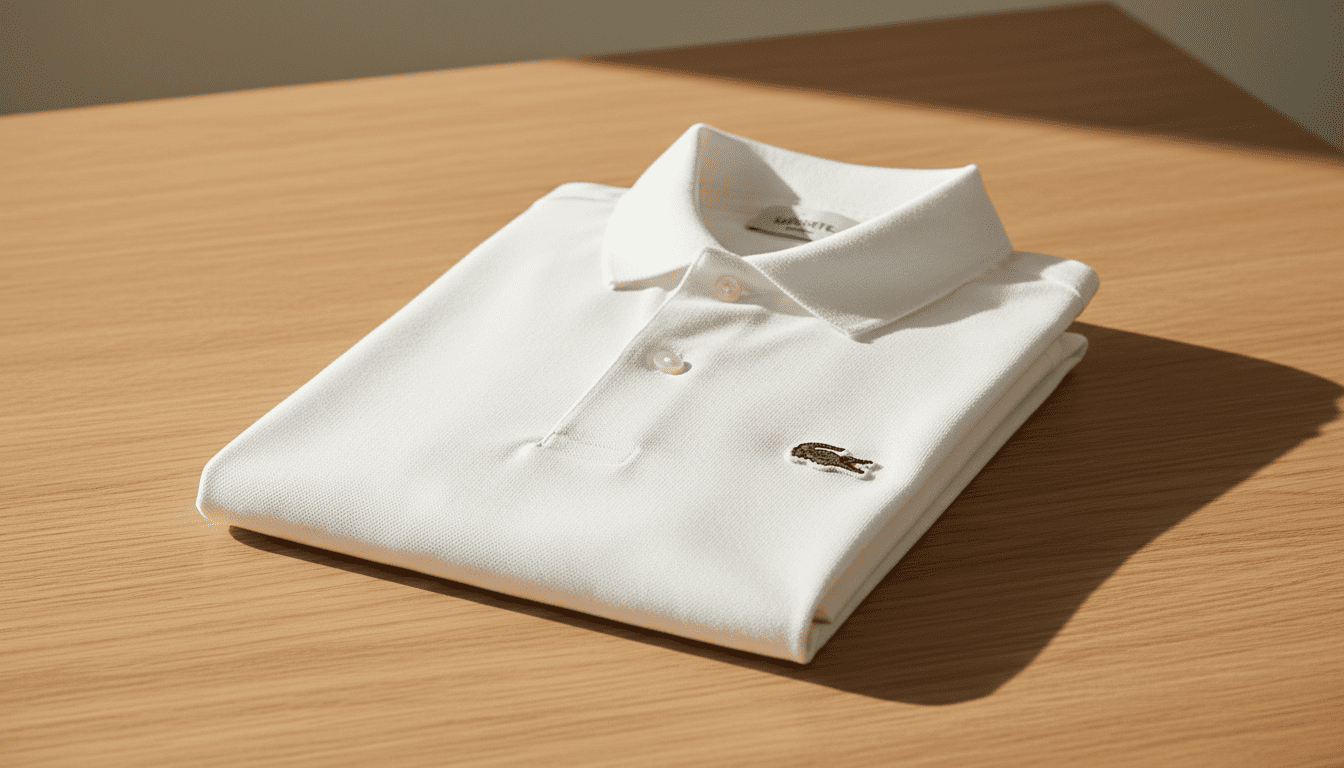
- Featuring a soft, flat collar that could be turned up to protect the neck from the sun
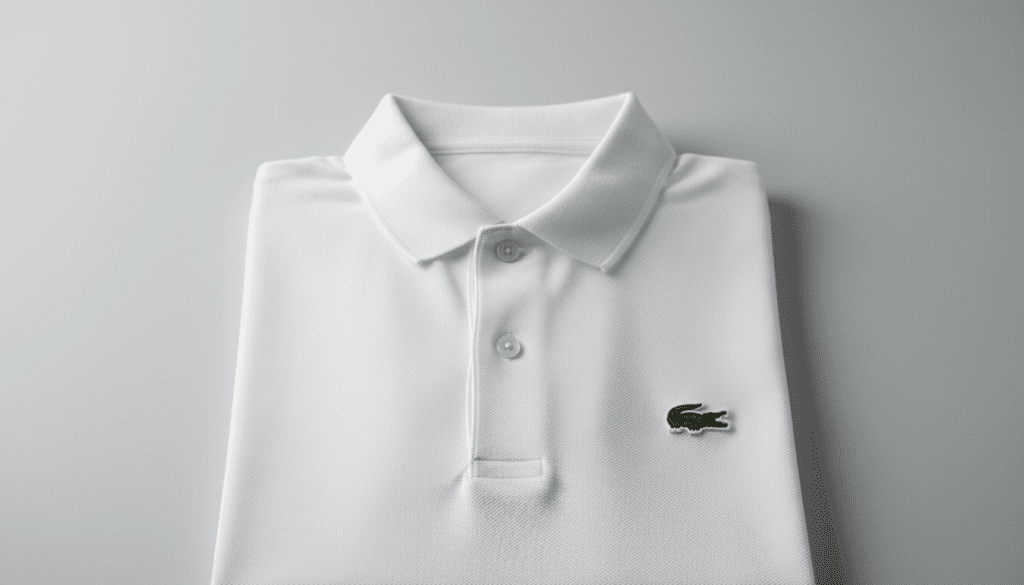
It was revolutionary on the court. Simple. Functional. Elegant.
This shirt would later be known worldwide as the Lacoste polo.
In 1933, René Lacoste partnered with knitwear specialist André Gillier. Together, they founded La Chemise Lacoste, a company dedicated to producing this new kind of sports shirt—each one signed with the small green crocodile.
The idea was bold for its time:
- A visible logo
- A sports garment worn casually
- A blend of sport and style in everyday life
The Lacoste polo was less about shouting status and more about a quiet statement: I move. I live. I play.
From Tennis Courts to City Streets
At first, the Lacoste polo was mostly for tennis players and sportsmen. But something interesting happened. The shirt slowly left the clay courts and grass lawns and found its way into everyday wardrobes.
By the 1950s and 60s:
- Golfers wore Lacoste on sunny fairways
- Sailors and yachtsmen wore it on deck
- Well-dressed men wore it casually with chinos or shorts
It was one of the earliest signs of what we now call sportswear as lifestyle.
The little crocodile wasn’t just a logo anymore. It had become a symbol of:
- Relaxed elegance
- Athletic heritage
- Understated confidence
Lacoste didn’t chase trends; it created a uniform for a new kind of life—active, mobile, modern.
Crossing Borders and Generations
As the decades passed, Lacoste expanded far beyond shirts.
The brand ventured into:
- Fragrances
- Footwear
- Watches
- Eyewear
- Leather goods
- Kids’ collections
And, of course, an ever-expanding world of clothing—knitwear, jackets, dresses, tracksuits, and more.
Yet the heart of the brand remained the same:
- A focus on refined simplicity
- Clean lines
- Sport-inspired elegance
In the 1980s and 90s, Lacoste began to appear in pop culture around the world. The crocodile showed up:
- In music videos
- In movies
- On the backs of artists, athletes, and actors
What’s fascinating is how different people adopted Lacoste for different reasons:
- For some, it was preppy and polished.
- For others, it was aspirational and cool.
- For many, it was simply comfortable and reliable.
The crocodile could live in many worlds at once.
Reinventing the Crocodile: Collaborations and Street Culture
The 21st century brought a new challenge: a younger generation raised on streetwear, sneakers, and bold collaborations.
Lacoste could have stayed stuck in its “classic polo” image. Instead, it chose evolution.
Over the years, Lacoste has:
- Collaborated with streetwear and fashion labels
- Partnered with contemporary designers and creatives
- Played with colors, oversized silhouettes, and graphic twists
- Reimagined the crocodile in surprising ways—miniature, enlarged, distorted, or multiplied
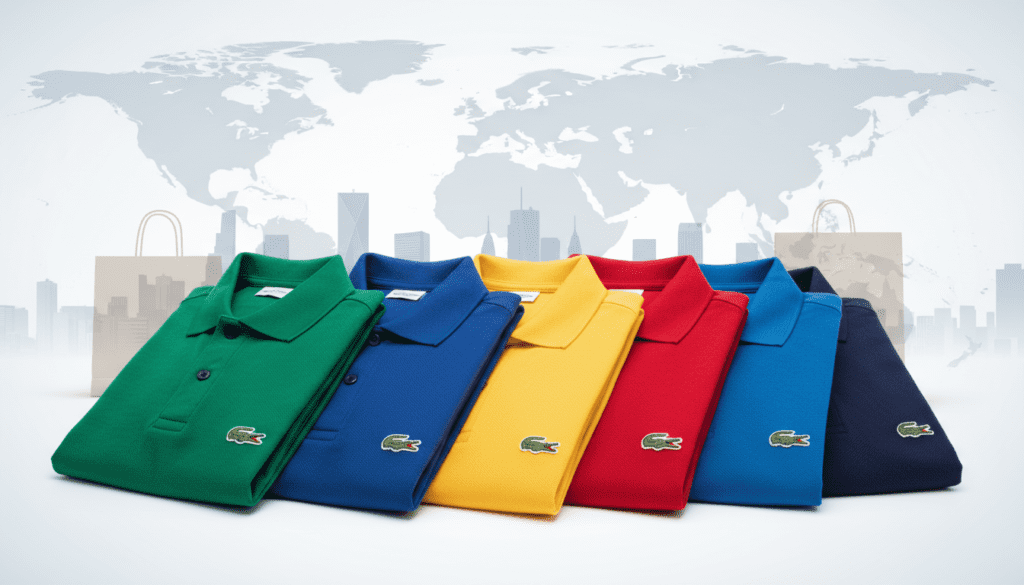
These collaborations helped Lacoste:
- Reach new audiences
- Stay culturally relevant
- Show that heritage doesn’t mean being frozen in time
The key was always balance: keeping the DNA of the brand—sport, elegance, simplicity—while speaking the visual language of each new era.
“Tradition is not about guarding the ashes, but about keeping the flame alive.” – Often attributed to Gustav Mahler, and a fitting lens through which to view Lacoste’s evolution
Lacoste Today: A Global Lifestyle Brand
So what does Lacoste look like now?
Today, Lacoste is a global lifestyle brand. It still sells the iconic piqué polo, but its world is much bigger:
1. Fashion Collections
Seasonal collections for:
- Men
- Women
- Children
These range from minimalist polos and sweaters to bold prints, technical jackets, and street-inspired pieces.
2. Sports Heritage
Lacoste remains closely tied to tennis—and sport more broadly:
- Sponsoring tennis tournaments and players
- Designing performance gear
- Honoring its roots on the court while appealing to everyday wearers
3. Footwear and Accessories
Sneakers, loafers, slides, bags, caps, and belts have become essential parts of the brand, helping complete the “Lacoste look” from head to toe.
4. Fragrances and Lifestyle Products
Lacoste fragrances extend the brand’s identity into scent: clean, sporty, fresh, yet refined—often marketed as expressions of movement and confidence.
5. Digital & Global Reach
From Paris to Tokyo, New York to Dubai:
- Flagship stores in key cities
- Strong online presence and e-commerce
- Social media that blends sport, fashion, music, and culture
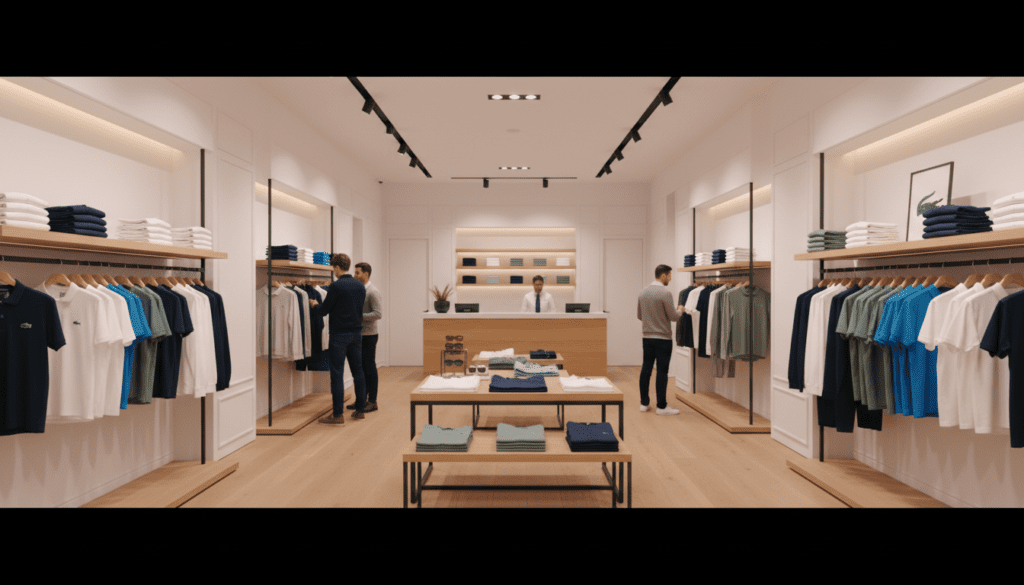
Lacoste today is worn by:
- Athletes on the court
- Creatives in studios
- Students on campus
- Professionals off duty
The crocodile has quietly adapted to every environment.
What Makes Lacoste’s Story So Distinctive?
Plenty of brands have logos. Many were born on sports fields or courts. But Lacoste’s story carries a few unique elements:
- A Player at the Core
The brand began with a real athlete—René Lacoste—whose own story of discipline, intelligence, and innovation is inseparable from the products. - A Nickname Turned Identity
“The Crocodile” wasn’t invented by marketers. It came from the press and the public, and René owned it. Authenticity has been baked in from the start. - The Invention of the Polo Shirt as We Know It
Lacoste didn’t just sell clothes; it changed what sportswear could be. The polo shirt became a universal garment—work, leisure, vacation, and beyond. - Balancing Consistency and Change
The brand remains faithful to its roots while reinventing itself through collaborations, new silhouettes, and updated aesthetics.
Then vs. Now: A Snapshot of Lacoste’s Evolution
Here’s a simple table to visualize Lacoste’s journey:
| Era | What Lacoste Looked Like | Key Identity Traits |
|---|---|---|
| 1920s–1930s (Origins) | René Lacoste, tennis courts, white polos | Innovation, performance, subtle rebellion |
| 1950s–1970s (Expansion) | Polo as casual wear, entry into new markets | Sporty elegance, status through simplicity |
| 1980s–1990s (Pop Culture) | Popular in music, prep culture, global growth | Iconic logo, aspirational lifestyle |
| 2000s–2010s (Renewal) | Collaborations, modern cuts, lifestyle expansion | Heritage + modernity, streetwear influence |
| Today | Global fashion & lifestyle brand, digital-first | Versatile, cross-generational, globally iconic |
Lessons from the Lacoste Story
Behind the crocodile is a set of timeless lessons—relevant not just for fashion brands, but for anyone building something lasting:
- Start from a Real Need
René didn’t create the polo because he wanted to start a fashion empire. He simply wanted a better shirt for playing tennis. Function first, brand later. - Own Your Story
A teasing nickname became a badge of honor. By embracing the crocodile, René showed how turning perceived weaknesses or quirks into strengths can define a brand. - Stay Simple, But Never Static
One of Lacoste’s greatest strengths is focus: clean lines, sports roots, understated style. Yet within that simplicity, the brand has constantly evolved. - Let Symbols Grow with People
The same crocodile has meant different things to different generations—sporty, preppy, classy, cool. Lacoste allowed the logo to live and breathe in culture.
FAQs About Lacoste’s Brand Story
1. Who founded Lacoste?
Lacoste was founded by French tennis champion René Lacoste in 1933, in partnership with knitwear specialist André Gillier. The brand’s origins lie directly in René’s innovations on the tennis court.
2. Why is Lacoste’s logo a crocodile?
René Lacoste earned the nickname “The Crocodile” from an American journalist, who admired his tenacity on court. He embraced the name and asked a designer friend to create a crocodile emblem, which later became the brand’s iconic logo.
3. What was Lacoste’s first product?
Lacoste’s first signature product was the short-sleeved cotton piqué polo shirt, created to offer greater comfort and freedom of movement for tennis players, compared to the stiff long-sleeved shirts of the time.
4. Is Lacoste still connected to tennis today?
Yes. Lacoste remains deeply tied to tennis through sponsorships, athlete partnerships, and performance collections, maintaining a strong link to the sport that started it all.
5. How has Lacoste stayed relevant in modern fashion?
Through:
- Collaborations with designers and streetwear brands
- Updated fits, colors, and styles
- Expansion into footwear, accessories, and lifestyle products
All while keeping its core identity of sporty elegance and the iconic crocodile.
Conclusion: A Crocodile That Refused to Stand Still
From a French tennis court in the 1920s to the streets of global cities today, Lacoste’s story is one of quiet revolution.
It began with a player who refused to accept uncomfortable uniforms.
It grew from a teasing nickname that turned into a powerful symbol.
It evolved from a single polo into a full lifestyle—while staying true to its roots.
The crocodile stitched on the chest is more than decoration. It’s a reminder that:
- Comfort and elegance can coexist
- Sport and style can blend
- A clear identity, lived consistently over time, can outlast trends
Lacoste today stands as a brand that doesn’t shout—but it never goes unnoticed.
Lacoste is a privately held global lifestyle brand generating close to €3 billion in annual revenue, and its iconic crocodile logo is valued in some studies at hundreds of millions of dollars—a far cry from the days when it was just a nickname on a tennis court.