
Brazil will host the COP30 climate summit in Belém in November, and the message from Brasília is stark: the 1.5 °C target is sliding out of reach unless countries bring far stronger plans—and the finance to match—within months. With geopolitics fracturing multilateral cooperation and climate impacts intensifying across the Amazon and beyond, Brazil is trying to corral a world distracted by wars and economic headwinds into a last-ditch push to keep the Paris Agreement’s most ambitious goal alive.
“War and trade conflicts are diverting resources and undermining cooperation—resources that should be directed to climate investments,” Brazil’s environment minister, Marina Silva, warned, calling for “ambition, coordination, and climate-aligned finance” ahead of COP30 in Belém. She added that the true test will be whether countries’ new national climate plans are “sufficiently ambitious” to align with 1.5 °C Valor International.
The COP30 stakes: new plans, old delays
Under the Paris Agreement’s timetable, governments are expected to submit their next generation of nationally determined contributions (NDCs) this year, covering 2035 targets with sectoral plans that show how emissions will fall. Fewer than 30 of roughly 200 countries had drafted them as of early summer, according to COP30 CEO Ana Toni, who urged governments to deliver by September so the UN can assess ambition before negotiations begin The Guardian.
The science could not be clearer. Recent years saw global temperatures breach 1.5 °C on a multi-month basis, and without steep near-term cuts, the world risks locking in levels of warming that push ecosystems past tipping points. As Toni put it: “Climate is our biggest war… We need to focus and not allow those [other] wars to take our attention away from the bigger fight” The Guardian.
Silva has indicated that more than 70% of nations have now committed to submit by the extended deadline, with Brazil and the UN pressing capitals to arrive in Belém with credible, 1.5 °C-aligned plans Valor International. But even she concedes that full alignment is unlikely—raising the stakes for a course correction at COP30.
Brazil’s role: convener, standard-setter, and a country of contrasts
Hosting a COP in the Amazon gives Brazil unique convening power. The Lula administration wants to position COP30 as a “foundational” summit that rebuilds trust, resets ambition, and advances a just transition roadmap, including a phaseout of fossil fuels and deforestation by 2030. Brazil’s updated NDC pledges to cut emissions 59% to 67% by 2035 against 2005 levels, and the government is rolling out an Ecological Transformation Plan and sustainable sovereign bonds to finance the shift Valor International.
Yet Brazil’s moral authority is intertwined with its own contradictions. Deforestation in the Amazon has fallen, and the country has re-energized environmental governance. But Brasília faces criticism at home and abroad for pushing new offshore oil frontiers—most controversially off the Amazon mouth—as a source of revenue to fund the transition. President Lula’s argument is that oil receipts can underwrite decarbonization; environmentalists counter that new exploration undermines the 1.5 °C pathway Bloomberg (archived). Political headwinds are real, too: Congress recently loosened environmental licensing rules, complicating the government’s green agenda Reuters.
This tension—between long-term ambition and short-term political economy—mirrors a global dynamic. As Silva put it in a stark reflection on financing, “The worst thing is not to plan—and the second worst is planning the wrong way,” calling for financial systems to assess whether flows are truly aligned with the 1.5 °C goal Valor International.
The 1.5 °C target in 2025: a narrowing window
The first Global Stocktake (2023) found the world off track for 1.5 °C, and since then, climate extremes have only intensified. Negotiators warn that current trajectories, especially if near-term 2030 targets aren’t strengthened, risk making a 1.5 °C-consistent pathway infeasible this decade The Guardian. The political bandwidth to correct course is under strain: wars, debt burdens, and cost-of-living crises are crowding out climate action and driving populist pushback.
“Spending more on defence means spending less on climate,” said a representative of the Alliance of Small Island States, arguing that delayed ambition translates directly into existential risk for the most vulnerable The Guardian.
Emerging economies’ perspectives: ambition with equity
Brazil has worked to elevate voices from emerging economies as it builds a coalition for results in Belém. Three themes stand out.
First, implementation matters. “Climate leaders are those who get things done, rather than those who say things,” said Arunabha Ghosh of India’s Council on Energy, Environment and Water, highlighting the need for NDCs that translate targets into sectoral action plans and investment pipelines The Guardian.
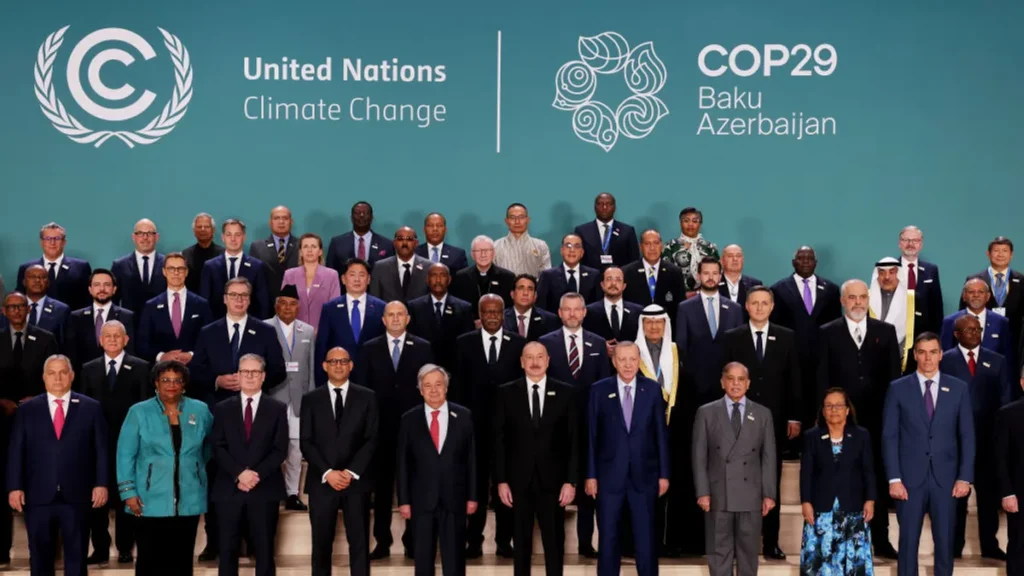
Second, finance is the hinge. At COP29, developed countries gestured toward mobilizing $1.3 trillion per year by 2035, including $300 billion in public finance. But emerging economies want a concrete delivery pathway—especially from multilateral development banks—before they can lock in steeper cuts and adaptation programs. “It’s all about the money,” Panama’s chief negotiator said bluntly The Guardian.
Third, the fossil transition must be real. Brazil’s environment ministry has floated the idea of a negotiated, time-bound roadmap to phase out fossil fuels—a step beyond the COP28 pledge to “transition away”—and connect it to deforestation phaseout and just transition support Climate Change News. Whether that gains traction amid resistance from petrostates is an open question.
China exemplifies the balance that many large emerging economies are trying to strike. The country’s rapid build-out of renewables has exceeded expectations, with roughly a third of electricity now from clean sources and capacity on track to double by 2030 relative to 2022. Analysts say China could potentially halve emissions by 2035; yet reports suggest Beijing has considered much weaker reductions, constrained by coal sector inertia and energy security concerns The Guardian. “Approving a new wave of large-scale coal projects risks… stranded assets and higher transition costs,” Greenpeace East Asia noted, urging China to lock in a 2025 emissions peak The Guardian.
Politics at play: multilateralism under pressure
Silva has spotlighted the erosion of multilateralism as a key “villain” of climate inaction, pointing to armed conflicts and trade tensions that sap trust and divert resources Valor International. That erosion is showing up inside climate forums. Pre-COP talks in Bonn started late over agenda fights and ended without clear negotiating texts on core items. Some negotiators saw deliberate obstruction by fossil-aligned countries to slow progress The Guardian.
Brazil’s presidency is trying to rebuild momentum by convening unusual alliances: circles of former COP presidents, finance ministers, and economists, plus a “global ethical stocktake” that puts Indigenous rights and knowledge at the center of the Belém conversation The Guardian.
Still, observers warn of two looming fault lines. One is finance delivery: Azerbaijan’s COP29 team has worked with Brazil on a “Baku to Belém” roadmap, but progress from development banks has been “low-profile,” raising doubts about hitting the $1.3 trillion figure The Guardian. The other is fossil fuels: activists fear the crucial question of a managed phaseout could get sidelined unless the presidency explicitly opens a negotiating space for it The Guardian.
What would a credible COP30 outcome look like?

Brazilian officials have set a high bar: a summit that returns climate cooperation to first principles—shared science, clear timelines, fair burden-sharing—and puts implementation at the center. Four signals would define a credible outcome.
First, a critical mass of 1.5 °C-compatible NDCs by September. That means whole-of-economy plans that front-load cuts this decade, with specifics on power, transport, industry, agriculture, and land use. As Silva emphasized, “what worries us isn’t when the plans arrive, but whether their commitments are truly aligned with the 1.5 °C goal” Valor International.
Second, a finance delivery track that adds teeth to pledges. Brazil and partners will need to extract concrete commitments from MDBs on concessional lending, de-risking tools, and capital adequacy reforms, plus clear public finance milestones through 2035. Without this, major emerging economies will struggle to sell deeper decarbonization at home.
Third, a negotiated fossil transition roadmap. Building on COP28’s “transition away,” negotiators could codify a time-bound phaseout of unabated fossil fuels with support for workers and regions, guardrails on carbon capture, and an explicit link to ending deforestation by 2030. Brazil’s suggestion to table such a plan would be a breakthrough if advanced at scale Climate Change News.
Fourth, accountability and integrity. COP30 can embed guardrails against greenwashing—stronger rules for carbon markets and corporate claims, and transparent tracking of NDC implementation—so that “leaders are those who get things done” is more than a slogan.
The Amazon lens: climate action, climate justice
Hosting in Belém makes the Amazon both a symbol and a test of credibility. Silva has repeatedly tied Brazil’s economic vitality to the forest’s health, noting that a large share of Brazil’s GDP depends on Amazon rainfall patterns Valor International. She has also warned of mounting impacts—desertified patches, low river flows, and unprecedented wildfires in humid forests—that underscore the cost of delay.
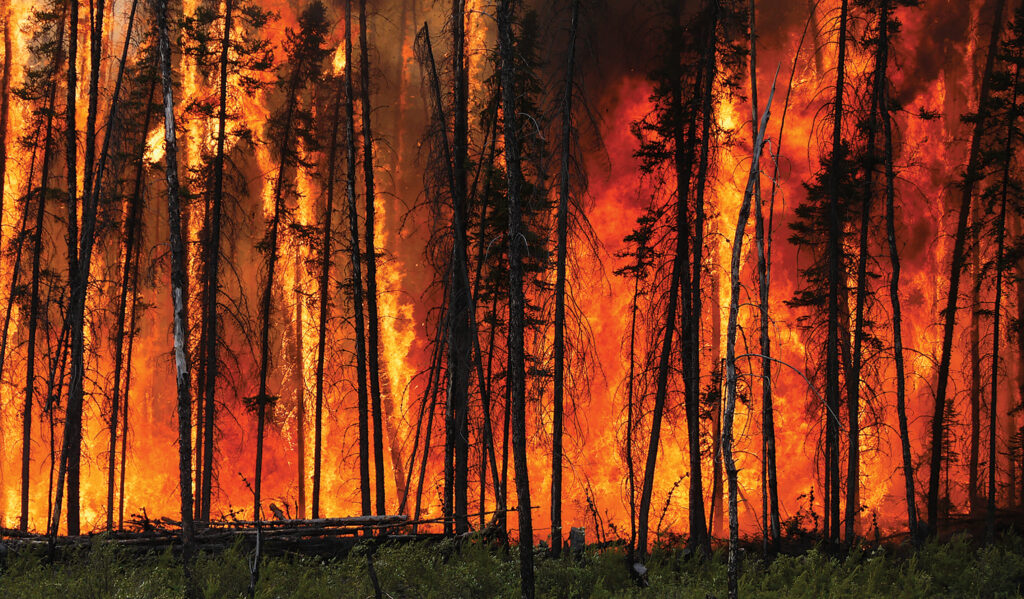
PHOTO: STEFAN DOERR
For many emerging economies and vulnerable states, justice is not an add-on; it is the operating system of climate success. “Around the world, the ‘unprecedented’ has become our new norm,” said Anna Rasmussen, chief negotiator for small island states, pointing to record-shattering storms and escalating loss and damage The Guardian. Brazil’s ability to braid together the 1.5 °C target with a credible just transition—at home and through global finance—may end up defining COP30’s legacy.
Conclusion: a line in the rainforest
“Ultimately, the real villains are inaction and our failure to plan,” Marina Silva has said Valor International. As COP30 approaches, Brazil is trying to convert urgency into outcomes: timely, 1.5 °C-aligned NDCs; a finance engine that works at emerging-economy scale; and a roadmap that moves the world from “transition away” to “phase out” of fossil fuels.
If Belém can secure those ingredients, the 1.5 °C target—already under siege in 2025—has a fighting chance. If not, the world may look back on an Amazon COP that sounded the alarm but arrived too late to change the trajectory.
“Climate is our biggest war,” Toni said. In Belém, Brazil wants to change how that war is fought—and who has the means to win it The Guardian.









[…] year’s COP30 is expected to feature updated Nationally Determined Contributions (NDCs)—the national climate […]