
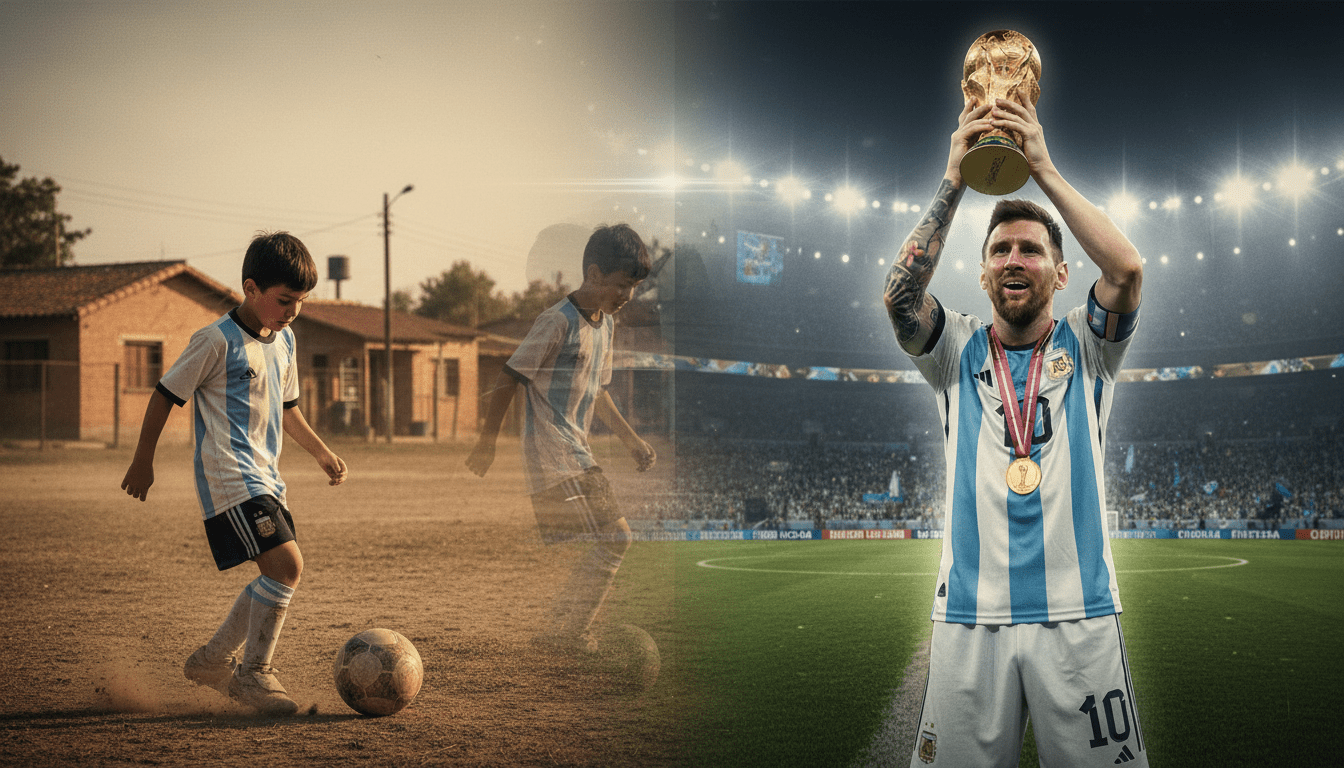
Lionel Andrés Messi’s story is one of the most powerful narratives in modern sports. It is not merely the tale of a gifted footballer, but the journey of a boy who overcame physical limitations, cultural barriers, and crushing expectations to become a symbol of greatness for generations. To understand why Messi is considered legendary, one must first understand where he came from, what he endured, and how his life shaped the player—and person—the world admires today.
As Argentine writer Jorge Valdano once said:
“Messi doesn’t try to be the best in history. He just wants to be the best version of himself.”
That quiet philosophy defines Messi’s entire life.
A Humble Beginning in Rosario
Lionel Messi was born on June 24, 1987, in Rosario, Argentina, a city known for its passion for football. He grew up in a working-class family—his father Jorge worked in a steel factory, while his mother Celia had cleaning jobs. Football was not a career plan; it was simply part of daily life.
By the age of four, Messi was already playing for a local club called Grandoli, coached by his father. Even then, adults noticed something different. He wasn’t just fast or skillful—he seemed glued to the ball, controlling it as if it were an extension of his body.
His grandmother Celia played a crucial role in his early development, taking him to training sessions and matches. After her death, Messi began pointing to the sky after scoring goals—a gesture that remains one of his most iconic celebrations.
The Medical Battle That Changed Everything
At the age of 10, Messi was diagnosed with growth hormone deficiency, a condition that severely limited his physical development. Treatment was expensive—around $900 per month—and his family could not afford it long-term.
Local Argentine clubs admired his talent but refused to pay for his medical care. At this moment, Messi’s dream almost ended before it truly began.
Everything changed when FC Barcelona intervened.
At just 13 years old, Messi moved with his family to Spain. Barcelona agreed to cover his treatment costs and enrolled him in their famed youth academy, La Masia. The club’s belief in him was famously sealed on a paper napkin contract, now one of the most legendary documents in football history.
This moment marks the true beginning of Messi’s professional journey.
La Masia and the Birth of a Genius
At La Masia, Messi faced new challenges: homesickness, language barriers, and the pressure of elite competition. Yet, on the pitch, he was untouchable.
Coaches quickly realized that Messi was not just a scorer—he was a football brain. His low center of gravity, close control, and ability to read the game were unprecedented.
By 17, Messi made his first-team debut for Barcelona in 2004. The football world had just been introduced to something special.
Facts That Define Messi’s Uniqueness
Here are some remarkable facts that highlight why Messi’s life and career stand apart:
- Messi scored 91 official goals in 2012, the most in a single calendar year.
- He is the all-time top scorer for both FC Barcelona and Argentina.
- Messi has won 8 Ballon d’Or awards, more than any player in history.
- He is the only player to win the World Cup Golden Ball twice (2014 and 2022).
- Despite his fame, Messi is known for his introverted and humble personality, rarely seeking media attention.
Club Glory: A Dynasty Built on Excellence
Messi’s years at Barcelona (2004–2021) defined an era of football. Under managers like Pep Guardiola, he became the centerpiece of a team that revolutionized the sport with tiki-taka football.
During this period, Messi:
- Won 10 La Liga titles
- Lifted 4 UEFA Champions League trophies
- Scored 672 goals for the club
His ability to adapt—from winger to false nine to playmaker—demonstrated his football intelligence and versatility.
The “Messi Style”: More Than Just Goals
While his goal-scoring records are legendary, Messi’s role as a playmaker is what truly sets him apart. He holds the record for the most assists in football history, with over 400 for club and country. His ability to “thread the needle” with a pass that no one else sees is a testament to his high footballing IQ.
Nutritionists and sports scientists often point to his physical discipline as a key factor in his longevity. Despite being diagnosed with a growth hormone deficiency as a child, Messi’s dedication to his craft allowed him to overcome physical limitations. His story is a beacon of hope for aspiring athletes worldwide, proving that “greatness” is often a choice made every single day in training.
The Argentina Chapter: From Criticism to Redemption
For years, Messi faced harsh criticism for not winning major trophies with Argentina. Finals were lost. Tears were shed. In 2016, he even announced his retirement from international football.
But legends are defined by comebacks.
Messi returned stronger, leading Argentina to:
- Copa América 2021
- Finalissima 2022
- FIFA World Cup 2022
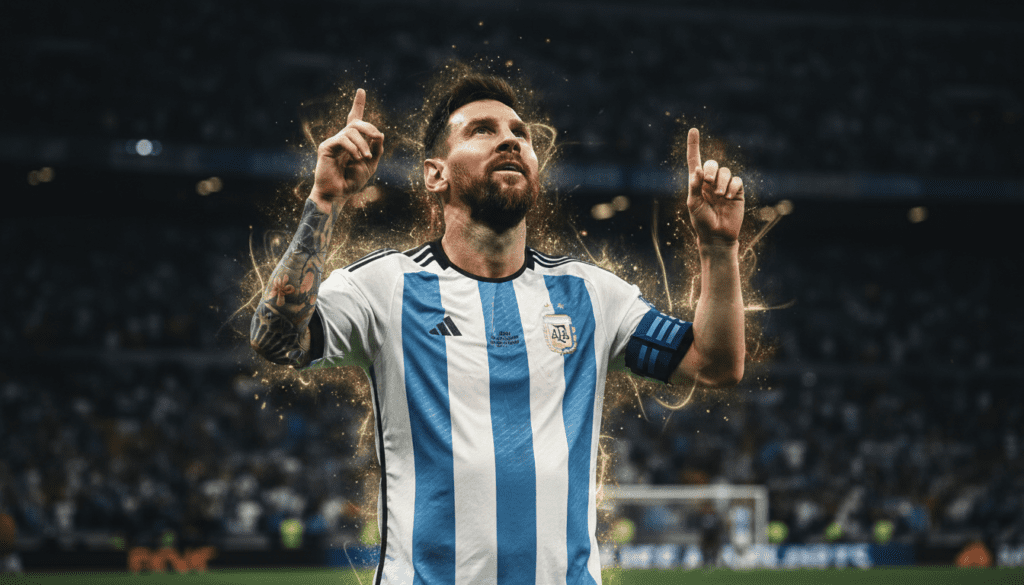
The World Cup victory in Qatar was more than a trophy—it was emotional redemption. Messi scored in every knockout round and lifted the trophy as captain, completing football’s greatest story arc.
Life Beyond Europe: Inter Miami and Global Impact
In 2023, Messi joined Inter Miami, transforming football in the United States overnight. Stadiums sold out. Viewership exploded. The sport reached new audiences.
He didn’t just play—he elevated the league, winning MLS Cup and consecutive MVP awards. His move proved that greatness isn’t tied to geography.
Frequently Asked Questions (FAQ)
What makes Messi different from other great players?
His combination of vision, balance, decision-making, and consistency over 20+ years is unmatched.
Did Messi overcome serious challenges in his life?
Yes. His growth hormone deficiency and early relocation to Spain were major life obstacles.
Why is Messi considered inspirational?
Because his success came not from physical dominance, but from intelligence, discipline, humility, and love for the game.
Conclusion: More Than a Footballer
Lionel Messi’s life is not just about trophies or records—it is about perseverance, loyalty, and quiet excellence. He showed the world that greatness doesn’t have to shout. It can whisper, glide past defenders, and change history with a single touch of the ball.
Messi’s journey—from Rosario’s dusty pitches to football immortality—is a reminder that legends are not born perfect; they are built through belief, sacrifice, and an unwavering passion for their craft.