

When it comes to intimacy, comfort, and safety should always come first. While exploring new positions can enhance connection and pleasure, some can increase the risk of injury if done incorrectly. According to medical insights from sources like the Cleveland Clinic and Healthline, certain positions are more commonly associated with strains, fractures, or muscle injuries.
This article highlights potentially risky sex positions and explains how to avoid harm—so you can focus on a safe and enjoyable experience.
Why Some Sex Positions Can Be Dangerous
Sex is a physical activity that involves coordination, flexibility, and sometimes significant pressure on joints and muscles. Injuries can happen due to:
- Poor alignment of the body
- Sudden or forceful movements
- Lack of communication between partners
- Fatigue or overexertion
Even healthy individuals can experience injuries if caution isn’t taken.
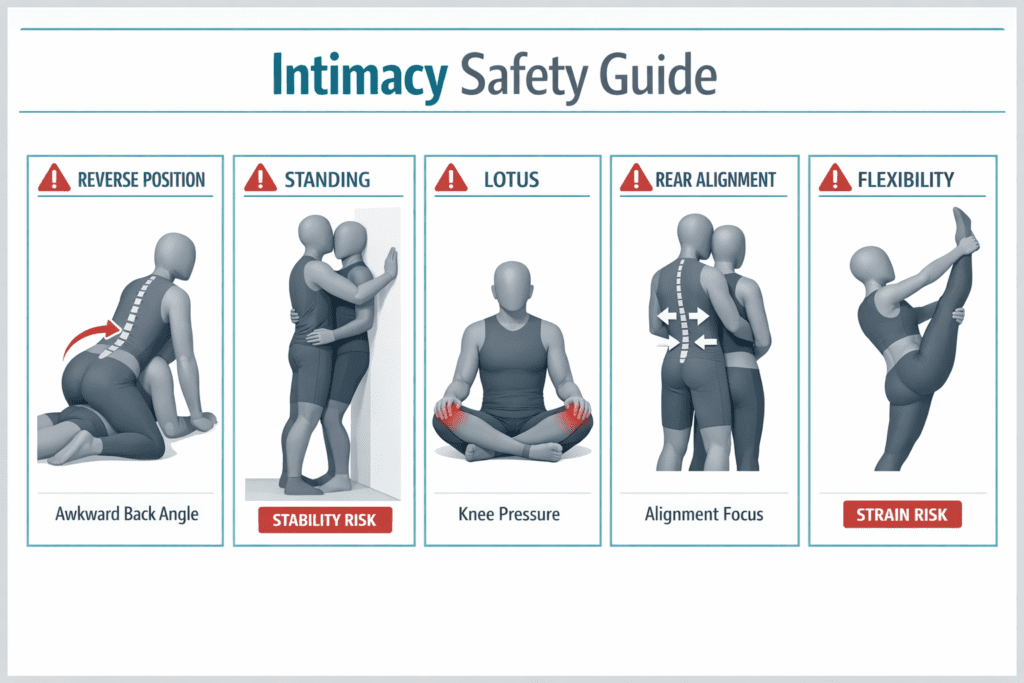
1. The “Reverse Cowgirl”
Why it can be risky:
This position has been linked in medical literature to a higher risk of penile fracture. According to urology studies cited by Healthline, it’s one of the most common positions associated with this type of injury due to limited control and awkward angles.
How to stay safe:
- Move slowly and maintain alignment
- Avoid sudden downward pressure
- Communicate continuously with your partner
2. Standing Positions
Why they can be risky:
Standing positions require balance and strength. There’s a higher chance of falls, muscle strain, or back injury—especially if one partner is lifting the other.
How to stay safe:
- Use support (like a wall or sturdy furniture)
- Avoid if either partner has back or joint issues
- Don’t attempt lifting without proper strength
3. The “Lotus” Position
Why it can be risky:
While intimate, this position puts pressure on hips and knees. People with limited flexibility may experience joint strain or discomfort.
How to stay safe:
- Stretch beforehand if needed
- Stop immediately if you feel pain
- Modify positioning to reduce pressure
4. The “Doggy Style” (with forceful movement)
Why it can be risky:
This position itself isn’t inherently dangerous, but vigorous thrusting or poor angle alignment can lead to discomfort or injury.
How to stay safe:
- Maintain controlled, steady movements
- Adjust angles to ensure comfort
- Use cushioning to support joints
5. Extreme Flexibility Positions
Why they can be risky:
Positions that resemble advanced yoga poses can overstretch muscles or strain ligaments—especially without proper flexibility.
How to stay safe:
- Avoid pushing your body beyond its limits
- Warm up or stretch beforehand
- Choose positions that feel natural
Expert Insight
Medical professionals emphasize that communication and awareness are key. According to the Cleveland Clinic, most sex-related injuries are preventable with proper care, pacing, and mutual understanding.
Tips for Safer Intimacy
- Communicate openly with your partner
- Start slow and build intensity gradually
- Use supportive surfaces (beds, cushions)
- Stay hydrated and avoid excessive fatigue
- Stop immediately if something feels painful
Final Thoughts
Exploring intimacy should be enjoyable—not risky. While trying new things can be exciting, it’s important to stay mindful of your body’s limits and your partner’s comfort. By avoiding high-risk positions or modifying them safely, you can reduce the chance of injury and maintain a healthy, satisfying relationship.
Disclaimer: This article is for informational purposes only and does not replace professional medical advice. If you experience pain or injury, consult a qualified healthcare provider.